“I Started An Award-Winning Beauty Brand With $15 In My Pocket”

When Brandi Leifso was 21, she left her abusive partner and moved into a Vancouver women's shelter. Propelled by the same inner strength that helped her leave her relationship, she decided to pursue her dream of launching a beauty brand that gave back. Fourteen years later, her award-winning, multi-million dollar cosmetic and skincare brand EVIO Beauty is beloved for its Pink Perspective eye patches—and has donated more than $568,000 to organizations that support domestic abuse survivors. In her new book, Fearless Choices, Leifso shares her story and hard-won insights on making decisions—sometimes messy, sometimes wrong, sometimes completely life-changing—and moving forward.
Whoever said “starting is the hardest part” must have had very different circumstances than mine. For me, the hardest part hasn’t been starting—it’s been finding the courage to start again. And then again. And again after that.
Five months and nine days after my 21st birthday, I had a moment of clarity: I couldn’t control everything that had happened to me, but I could choose what came next. My life wasn’t just happening to me—I had the power to shape it, and that meant I had the power to start fresh, as many times as it took.
I sat on the floor of our home office in our strip-mall apartment, my heart racing, my breath coming in short, shallow gasps. My palms were slick with sweat, and every sound outside felt like a threat. My partner and I had just gotten into another fight, his paranoia spiralling out of control alongside the erratic swings of his addiction. This time, he hurled a metal tray at me, missing me by mere inches before leaving the apartment. I shoved a chair against the office door, a small barrier between me and the fear of him returning. My mind was spinning, tangled in panic, but one thought broke through the noise: I need help.
I grabbed my phone, opened Google, and typed in desperation.
The first number that appeared felt like a lifeline. My shaking fingers pressed call.
“Vancouver Rape Relief and Women’s Shelter. Is this an emergency?”
“No,” I whispered, my voice barely audible. “Are you safe?”
“No.”
That single word hung in the air, heavy and final. It was all I could manage, and yet it said everything. My body felt frozen, but somewhere, a part of me—the part that had been quietly urging me to act—was already in motion. I barely remember the rest of the call, just fragments of instructions: how to get to the safehouse, how to circle the block to ensure no one was following me and to call 911 if I felt in danger.
The moment I hung up, I moved with urgency, throwing some clothes and my laptop into a bag. I left the apartment trembling but determined. A strange mix of panic and relief washed over me as I stepped out the door, believing I was leaving for good.
That first night at the shelter, surrounded by 29 other women escaping trafficking or abuse like me, I lay on the bed staring at the popcorn ceiling. Exhaustion had hollowed me out, leaving me emotionally and physically drained. I felt like a ghost of myself, with barely enough energy left to try and calm my frayed nerves. Each breath was a conscious effort to ground myself, to reassure my shattered psyche that I was safe. For the first time in ages, I noticed the small details around me, like the stale air brushing against my dry, sleep-deprived eyes. The stuffy air, normally oppressive, felt oddly comforting, a silent testament to my newfound safety.

My assigned room, although sparse, offered a sense of peace. It was furnished with a solo bed, which I claimed, a bunk bed, a nightstand and a three-drawer dresser. I was the first to arrive, soon joined by a woman who took the bottom bunk. She seemed familiar with the place, like it wasn’t her first time there. Hotel amenities were laid out—almost as if someone had snatched them from a Fairmont. It offered a measure of normalcy. I was relieved that I wouldn’t have to ask for something as basic as a bar of soap.
Before I came to the shelter, my life was a carefully curated performance directed by him. Every detail of my daily routine was orchestrated to his liking: what we ate, what music played on the record player every morning, even my clothing choices didn’t seem like my own. I had become an expert in reading his every mood, constantly tuning in to his emotional frequency while completely neglecting my own. Living with him was like tiptoeing through a minefield, where every step had to be meticulously calculated to avoid setting off an explosion. On the rare days when he didn’t pick my clothes for me, I’d anxiously choose my outfit based on my best guess of his mental state. If he seemed to be in a creative mood, I’d wear an oversized orange vest he’d bought for me on a trip to Palm Springs, making me look like Gossamer from Looney Tunes. When he was feeling melancholy, I’d dress in a grey wool blazer, hoping to blend into the background and avoid triggering his temper. For so long, I didn’t even realize how much of myself I had lost. My choices—what I wore, how I spoke, even the tone of my laughter—weren’t truly mine. They were calculated guesses, desperate attempts to navigate his ever-shifting moods and avoid the fallout of getting it wrong.
Living like that, I wasn’t just surviving him . . . I was disappearing.
It wasn’t until I left that I began to understand the weight of that loss.
That first night at the shelter, I noticed a meaningful shift in my confidence. Deciding to get help was a strong affirmation of my own self-worth, and it quickly triggered a wave of inner strength.
My gaze shifted from the popcorn ceiling to a 1970s women’s liberation poster on the wall. It had an abstract flower that looked more like a paperbark birch tree you’d see in a feel-good cartoon. But I felt anything but good—anger, shame and guilt seeped through me, repelling anyone’s attempts at support or kindness. Rounded over the flower in a red curly font, the text said Sisterhood is blooming, followed by Springtime will never be the same beneath the purple soil. It looked bold and empowering. Despite my dejection, I could almost hear Regina George from Mean Girls say, “Get in, loser. We’re taking down the patriarchy.”
Finding your strength doesn’t always feel empowering in the moment—it can feel messy, overwhelming, and even painful. You might battle waves of anger, shame or guilt, but those emotions don’t mean you’re weak; they mean you’re human. The decision to seek help, to say enough, is a radical act of self-worth, even if it doesn’t feel that way immediately. Growth often starts in discomfort. You’re not failing because it’s hard—you’re blooming, even when it feels like everything inside you is resisting.
For days, I let myself sink into that heaviness, paralyzed by anger and shame. But then I realized I had a choice: I could keep staring into the void, dwelling on how unfair life felt. Or I could step up and become the role model I so desperately needed but hadn’t found—or maybe wasn’t ready to see—in anyone else.
I use the term “role model” with a measure of reservation. We perceive role models as exemplars to follow, but that phrase can gloss over the fact that role models are limited humans like anyone else. Still, at that time in my life, I could have used a North Star. Or an example of how my life could be radically different. When I couldn’t find one that I could relate to, I made up my own next steps.
I watched YouTube.
I didn’t start watching YouTube with a “plan” per se. In retrospect, I was numbing my feelings and still trying to escape my reality. But as time went on, I found the motivation I needed.
For months leading up to that night at the shelter, I had nursed a dream of launching a cosmetics line that would create change in the world. YouTube eventually became my portal of possibilities. It was there that I discovered Michelle Phan, whose calming voice first took me on a journey to make the most of $20 with a “$20 makeup challenge haul.” This challenge struck a chord with me because I only had $15 to my name and I didn’t want to just buy some makeup, I wanted to develop a whole makeup brand.
I hope this provides some perspective to anyone else at a crossroads, staring down the barrel of a women’s liberation poster and searching for a road map. Let your next move come from something that lights a spark within you, something you’re drawn to—however small or seemingly insignificant it might feel. It could be a hobby you’ve neglected, a conversation you’ve been meaning to have, or even just the simple act of creating space to think. The point isn’t to have the perfect plan but to take a step. One small, genuine step can lead to another, and before you know it, you’ll find yourself on a path that feels less forced and more like you coming back to yourself. The road map you’re searching for? It’s already within you. Trust the tug, honour what feels right and let yourself move forward, even if it’s just one step at a time.
With a fervour teetering on obsession, I pored over every viewer comment beneath Michelle Phan’s videos. I needed something to hold on to, some small thread of connection and hope. What I found surprised me: The community was kind. They weren’t attacking Michelle Phan, or each other. They weren’t criticizing perceived imperfection. They were thanking her for teaching and inspiring them. They were expressing gratitude for her vulnerability and being vulnerable in return, sharing their own stories. With everything you hear about online comments and the often cutthroat beauty industry, I had braced myself for a snake pit of negativity and judgment. Instead, I found an abundance of support and empathy. For the first time in a long while, I felt optimistic and less alone. This was a community I wanted to be a part of, a place where kindness and encouragement thrived.
So, with the rudimentary design skills I had picked up from my time at [a] talent agency and my blue floral laptop, I downloaded a bootlegged version of Photoshop and created a catalogue of lip glosses named after women who inspired me. I called it KarmaFace.
I have no idea what came over me when I made the choice to do what I did next. With a once-decayed but now borderline-lunatic confidence, I walked from store to store and pitched buyers a collection of lip glosses that existed only in my imagination. And I requested a 50 percent deposit in advance. It was bold, reckless even, but I felt a spark of something I hadn’t felt in a long time—belief in my own audacity and potential.
I can’t say which is the greater madness: that I had the temerity to sell a non-existent product I had no idea (yet) how to bring to life, or that the buyers believed I could pull it off. Regardless, in a few short months—albeit a chaotic couple of months, marked by relentless effort, late nights and moments of doubt—KarmaFace, the predecessor to what is now EVIO Beauty, materialized and eventually made its way onto shelves across North America.
What began as a spark of imagination had become real, tangible products—products that were not only in stores but also winning “Best Product” awards from some of the most respected publications just a couple years after I hit the pavement with my photoshopped catalogue. It was overwhelming, intense, and deeply rewarding.
Have you ever done something so bold, so completely out of character, that you stop and think, Who even is this person? And yet, in that moment, you feel a surge of gratitude because that version of you, the one with courage and fire, finally stepped forward when you needed her most.
Here’s the thing: That bold, fearless person inside you isn’t some stranger—they’ve been there all along. Sometimes it takes a moment of pressure, fear, or necessity to bring them out, but they’re yours to call on whenever you need them. That version of you is capable, brave, and ready to act, even when everything feels uncertain. So if you’re at a crossroads, wondering if you have it in you to take the next step, trust that they’re there. They’ll show up when you need them most—you just have to give them the chance.
Although I felt paralyzed at home, I never felt that way at the shelter. I didn’t think I’d be sticking around, and neither did the staff. They’d say things like “Brandi won’t be here for long.” I knew they meant to encourage me, but their words only fuelled the doubts swirling in my mind—that this wasn’t where I belonged. Maybe I was taking a bed from someone who needed it more. Maybe I should just go back home, where, despite the danger, it still felt like I belonged.
But familiarity has a way of distorting reality, making it hard to see danger for what it truly is. Finding growth and healing often requires stepping away from what feels like home—even when it’s painful. What’s familiar isn’t always what’s good for you.
I didn’t connect with the other women at the shelter. Most of them had drastically different concerns from me, like children, in some cases, or substance use, in others. Or both. I also didn’t have much emotional capacity to connect with anyone. I was hyper-vigilant and hyper-protective, which is the opposite mode you need to be in to engage meaningfully with people or to feel like you belong. Instead, I wandered through the place like a ghost, doing my best to avoid interacting with anyone. The house ran on a chore rotation—each day, a different woman took on cleaning, sweeping, or cooking dinner. As silly as it sounds now, the thought of cooking for everyone absolutely terrified me. My confidence had been chipped away so much that I wasn’t even sure I could pull it off. I saw my name on the schedule for Thursday night’s dinner and, right then, made a promise to myself: I’m getting out of here by Thursday morning.
When Thursday morning came, I found myself back at the abandoned strip mall.
It’s wild how strong conviction can be, even when you know you’re making the wrong choice. I was in survival mode. When you’re doing what you have to do to stay afloat, it can feel like you have nothing left to lose, whatever transformational choices you are on the edge of making. At the same time that I went back to him, I was also plunging headfirst into building my own company. There I was, making two different choices, which led me down two parallel paths—with vastly different consequences.
Despite my life being a full-blown dumpster fire, I managed to present myself like I had it all under control. It may have been a way to keep people at a distance, or perhaps I was using the facade as a coping tool to convince myself that I was okay. Naturally, people at the shelter mistook me for someone with a plan and the resources to make it happen. In reality, I arrived with $15, no credit cards, two changes of clothes and my laptop. That’s all I had, so that’s what I started (again) with.
I was a 21-year-old girl with no formal education, no knowledge about how to actually manufacture cosmetics and a catalogue I had pasted together. Yet a store manager recognized potential in my vision and placed her order with a deposit. I was in business. With the added legitimacy of this shop on board, three or four other stores followed. Now I had to figure out how to actually make the stuff.
Excerpted from Fearless Choices: How to Reclaim Your Power One Decision at a Time by Brandi Leifso with Eliza Robertson ©2026. Published by HarperCollins Publishers Ltd. All rights reserved.
This article contains affiliate links, so we may earn a small commission when you make a purchase through links on our site at no additional cost to you.
The very best of Chatelaine straight to your inbox.
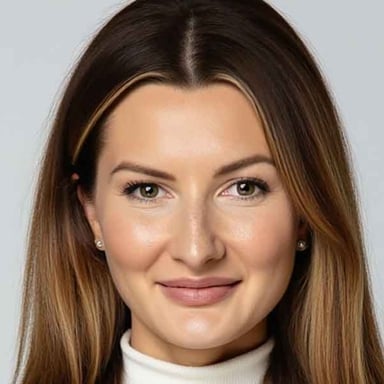
Brandi Leifso is the founder and CEO of Evio Beauty Group Ltd., a purpose-driven brand on a mission to reduce the effects of stress on skin and community. She was named one of Chatelaine’s Women of the Year and recognized as one of Canada’s Top 25 Women of Influence and the Retail Council of Canada’s Independent Retail Ambassador of the Year. Brandi has spoken on global stages including the Forbes Under 30 Global Women’s Summit, and her story—from living in a women’s shelter to building a multi-million-dollar beauty brand—has been optioned for a feature film. She lives in Toronto.