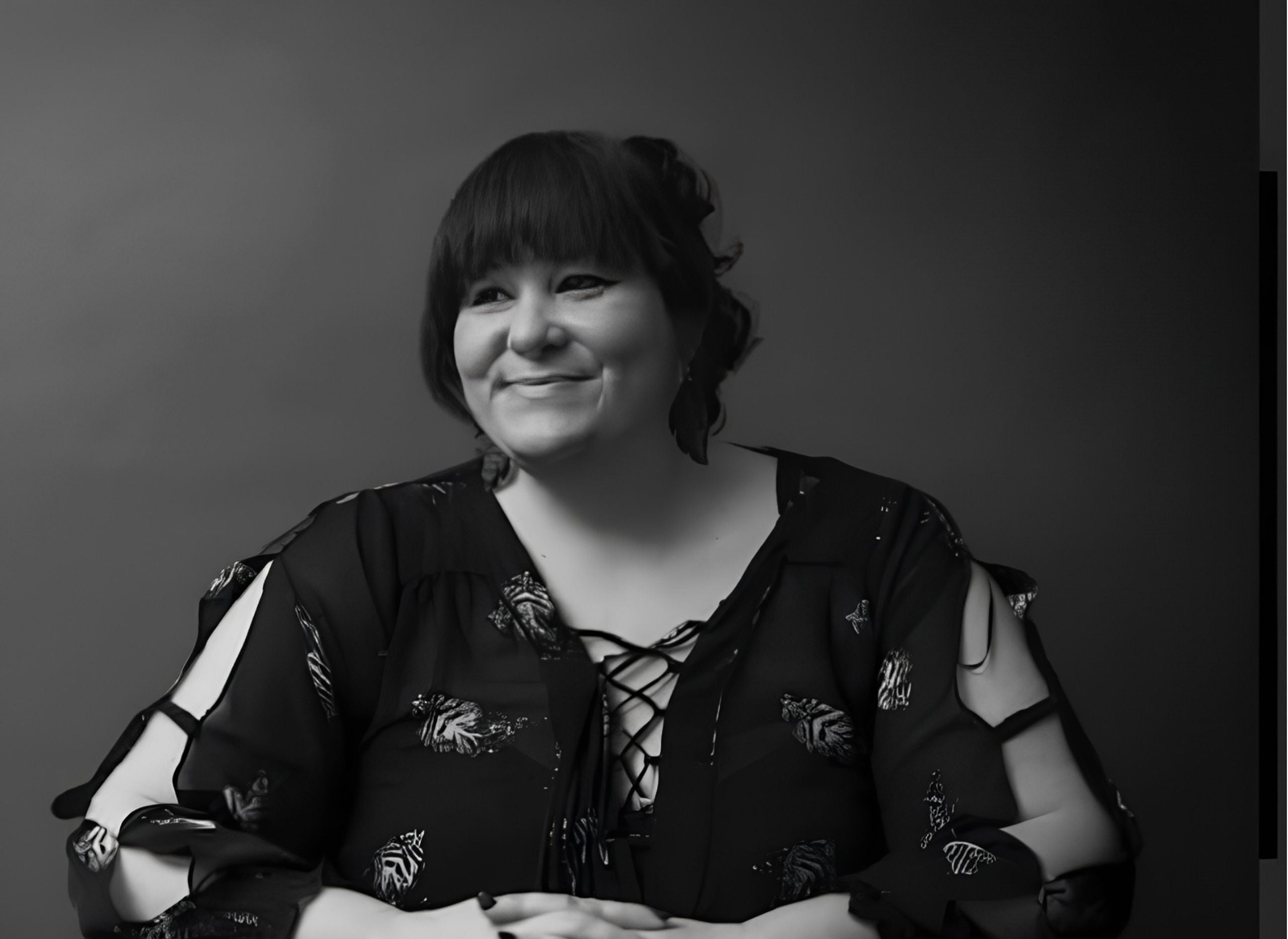

Breklyn Bertozzi asked her doctor one question, already knowing it would cost her something just to ask. By then, it felt like everyone knew more about her body than she did. She had seemingly run out of things to find out on her own—and as she sat in that doctor's office, there was one door she still hadn't shut. There was one door she was hoping to keep open.
Then: "I wouldn't recommend another pregnancy."
She stopped asking after that. She shut the door.
One day, years later, at a talk in a conference room at McMaster University, a doctor said something that caused Breklyn to get up and leave the room. She wasn't upset. In fact, what she heard should have made her happy. Emotions swept over Breklyn as she processed what she heard in that room: People living with HIV could have children without passing on the virus.
She hadn’t known. Her doctor didn't know. She spent years behind a shut door that never needed to be closed.
Breklyn was not the only one. By the time she sat in that conference room at McMaster, women living with HIV had already spent decades navigating a system that was not built around them.
The early research that shaped HIV treatment didn’t include women in it. When HIV emerged in the early 1980s, public attention—in Canada and other G7 nations—was fixed on gay men. Women were left out of studies that doctors used to make treatment decisions. Even the medications women received were developed around bodies that weren't theirs.
When the first HIV medicines—called antiretroviral therapies—were approved, no one knew yet what they would do to a woman's body. Women of childbearing age had been routinely excluded from clinical trials for decades, a practice that extended far beyond HIV research.
The information came later, after the prescriptions were written. Women gained unexpected weight. Some developed rashes. In the most severe cases: liver damage, nerve damage, side effects serious enough that some women stopped taking the medications that were keeping them alive. Across hundreds of antiretroviral studies, women had been a median of just 19 per cent of participants. Racialized women barely registered in the data.
That absence showed up in more than the medications. When HIV itself was defined around how the virus appeared in men, women whose symptoms looked different were diagnosed late, misdiagnosed or missed altogether.
When Breklyn's doctor gave her his answer, neither of them knew about U=U. Undetectable equals untransmittable, a scientific consensus confirmed in 2016: that a person living with HIV and whose treatment maintains an undetectable viral load cannot sexually transmit the virus. He wasn't withholding anything. The trials that shaped his answer were built on the 81 per cent that didn't include women. It cost her years she didn't need to lose.

The conference at McMaster changed more than just her understanding of HIV. In 2018, her daughter Carmella was born, HIV-negative. "I am that science in the flesh," Breklyn says. She left that conference room and didn't stop moving. Peer researcher. MEWA, Meaningful Engagement of Women Living with HIV. The U=U task force. Executive Director of the Canadian AIDS Society. She knew she was not the only woman who had to find this information herself. So she has spent the rest of her career making sure the next woman didn't have to look as hard.
In the late 1980s and 1990s, women living with HIV around the world came to the same conclusion without consulting each other. The disease wasn't discriminating, but the system was. So, they stopped waiting for the system to find them and started building one that would. Peer networks formed in cities that had never spoken to each other. Support groups met in church basements and community centres where questions could be asked without consequence. Information moved person-to-person because no other channel was reliably carrying it. The women who built those networks were not waiting for permission to survive the epidemic. They had already spent too long waiting for information that never came.
For Indigenous women in Canada, HIV research had a blind spot of its own. It rarely looked at what made the healthcare system feel unsafe or inaccessible for Indigenous women, how treatment and care could be delivered to feel safe enough to seek, or what a healthcare model rooted in their own cultures and communities might look like.

Doris Peltier was diagnosed with HIV in 2000. At almost 70, she is a mother, a grandmother to seven, a great-grandmother to ten, and one of the most consequential advocates for Indigenous women living with HIV in Canada. She comes from Wiikwemikoong, where elders carried history in their voices and story was medicine.
“Some people might call me an icon,” Doris said. “I am a voice.” She had been living in Toronto for 30 years. When the results came back positive, she wanted to be near her community, not the city. Her family came. Her daughter placed her youngest grandchild next to her on the hospital bed. “I felt like somebody ancient was looking at me," she says. "We believe that our children come from spirit—that they're still spirit for the first part of their life journey. And I felt that. I need to live.”
The treatment was hard but it saved her life. Returning home to Manitoulin Island, she stayed, committing to a path that was new to her. "I chose to walk up tall," she says. "Hold my head up." When people whispered, she had one instruction for her family. "If they want to know what I have, tell them to come and talk to me.”

Doris spent years pushing back against the way Indigenous women were represented in HIV research and public health conversations. She took what she had learned and built what was missing. Through projects like Environments of Nurturing Safety and Visioning Health, Indigenous women living with HIV began reshaping HIV advocacy and research around questions of wellness, culture, safety and community—alongside clinical treatment itself.
"There was a paradigm shift," she says. "I really believe I had a role in that."
The impact of that work now extends far beyond Canada. Her work is rooted in Indigenous worldviews of understanding health through a whole person lens, rather than Western approaches to health that often only focus on the physical. A system that treats only the virus leaves everything else untouched: the stigma that isolates women from seeking help, the disconnection from culture and community that makes care feel unsafe. Doris built research that held all of it. As a member of the World Health Organization's Women Living with HIV Advisory Group, she brought those questions into global conversations about what HIV care looks like when it is designed and led by Indigenous women.
But not every pathway to care ran through a research institution. Sharifah Nalugo Kyomukama built hers out in the open.
Sharifah was 14 when she walked to the front of her school assembly in Uganda and stopped letting the rumours speak for her. The school had been watching for weeks. Two visits to the matron's office every day. Morning and evening without exception. Whispers spread through the school faster than facts. "I could not concentrate on my studies," she says. "Even teachers and students were discriminating. I would sit at a desk alone.

"They are talking because I am hiding it myself," she says. "I knew it was time to stop."
On the day she was asked to lead prayers at the school assembly, she walked to the front of the room knowing what she was about to do. She had seen what happened when people spoke openly about HIV. She had just never done it for herself.
Before the prayer began, she declared, “What the matron said is true. I was born with HIV.”
The disclosure changed more than her own experience. Other students quietly approached her afterward. They were HIV-positive, too. The silence had not protected them. It had isolated them from one another.
Sharifah had done what women living with HIV had been doing for decades in different rooms around the world. She made it safe for someone else to speak. Access to care rarely began with a clinic. It began with trust. With one person willing to go first. Research bore that out. Peer-led, women-centred approaches improved engagement in care, treatment adherence and long-term health outcomes for women living with HIV.
Sharifah brought that instinct with her when she came to Canada. What she found surprised her. She calls Peel region a secret city. Women hiding in their corners. Through Moyo Health and Community Services, she builds programs that don't look like HIV programs. The entry point is never the diagnosis. It is the room where women feel safe enough to stay.
During COVID, when clinics closed and people had nowhere to turn, Sharifah built a TikTok profile. More than 200,000 people follow her today. Private messages arrive from around the world; questions about testing, treatment, disclosure. Questions people are too afraid to ask anywhere else. "Make sure that someone else knows," Sharifah says. "Share what you know, even if it's just to one person."

HIV is not a closed chapter. In Canada, the virus is rising among heterosexual women, who represent roughly a third of new diagnoses. The epidemic is still widely seen as “someone else's problem”—a disease that was solved, or is isolated to the gay community. Those assumptions have consequences. When women don't see themselves in the story of HIV, they don't get tested. When doctors don't see their patients in that story, they don't ask the right questions. Diagnoses continue to come late for women—and sometimes they don't come at all.
It’s not just the lack of education or science that’s contributing to the rise in cases. Canada's own criminalization framework makes visibility dangerous for women living with HIV. The laws built through women's activism against aggravated sexual assault are now being used against them. Visibility can mean violence, lost housing, losing custody of children; and non-disclosure could mean criminal prosecution. Canada has one of the highest rates of HIV criminalization in the world, despite having no HIV-specific legislation. The framework remains and it has not kept women safe. It has not kept pace with science. Women have been charged and convicted for non-disclosure even when their viral load was undetectable and transmission was scientifically impossible. Ten years after U=U, the science is unambiguous.
The gap is not in the research. It is in who the research is reaching.
Canada helped write the global rules for women-centred, community-led HIV care. The Canadian Foundation for AIDS Research (CANFAR) is actively investing in projects and rapid testing and linkage to care programs that commit to closing the gender gap in HIV research. Even still, cases are rising among heterosexual women in Canada.
Ending HIV is not only a scientific challenge, but a societal one.


