She Had No Family When She Died. Her Neighbours Made Sure She Wasn’t Forgotten

An undated photograph of Chantal Simard, who died in December 2024 at the age of 83.
Chantal Simard once said that her biggest fear was to die alone.
At the age of 83, she had outlived the rest of her family, never married nor had children. She hadn’t spoken to her oldest friend in 20 years.
A recluse, she clung to the physical manifestations of her memories, and those of her late family members. Her house was full to bursting: family photographs dating back to the 1880s; her father’s medical textbooks and supplies from the 1930s; her grandfather’s engineering instruments; newspaper clippings of her parents’ engagement announcement in 1940; their joint, hand-written passport and visa from their honeymoon to the United States that same year.
Yet it wasn’t just family memories that cluttered every corner of Simard’s house: she kept bread fasteners and elastics, thousands of newspapers and magazines, and hundreds of cookbooks, the margins of which she had carefully notated with advice from the cooking shows she diligently watched.
Her hoarding had left her living out her final years in unsanitary and dangerous conditions, which she did her best to hide from the world.
That included her neighbours Anne-Marie Vachon, 46, and Manon Gauvin, 60.


“I knew her,” Gauvin says, speaking in French at Vachon’s dining room table, Simard’s now vacant house visible from across the street. But it wasn’t until after her death that she “learned who she was.”
The two women, alongside eight other neighbours, spent three months in early 2025 sorting Simard’s belongings and emptying her house—a task typically reserved for next of kin. Otherwise, the notary Simard appointed as her executor would have hired a junk removal service, and the Simard family’s history would have ended in a dumpster.
“It was about giving her dignity,” Vachon says. “I was very sad to imagine that just anyone would throw it all away.”
***
Vachon and Gauvin started helping Simard at the onset of the pandemic, bringing her groceries and fixing her TV. “The [lockdown] made it valid for her to ask for help,” Vachon says. “She had always taken care of herself.” But even when pandemic restrictions lifted, Simard’s neighbours were never invited beyond the front entrance of her small white bungalow.
Knowing her elderly neighbour lived alone and kept to herself, Vachon familiarized herself with Simard’s routine: when the lights would go out at night, and when the curtains would open in the mornings.
One evening in December 2024, Simard’s house stayed dark. Through other neighbours, Vachon learned Simard had been taken to the hospital in an ambulance. She was eventually able to track her to a hospice house.
Simard had been living with undiagnosed end-stage cancer, and would die just one week later. Vachon went to Simard’s house with her key to bring her some comforts from home. There, she found some old correspondence between Simard and her earliest friend from childhood—a classical pianist and composer who grew up beside the Simard family and now lived in Montreal. The two had lost touch decades earlier, but Vachon reached out, hoping his contact information had remained the same.
While the friend (who prefers to remain anonymous) wasn’t able to visit in person, Vachon was able to get him on the phone. Simard was already struggling to speak, but she was lucid enough to hear her friend say goodbye. All Simard could say was “thank you.”
Vachon also arranged a series of visits from Simard’s other neighbours to fill her final days with company.
“She was really moved. She was just so grateful. I don’t think she could conceive that someone would take care of her like that—just because it’s the human thing to do,” Vachon said.
Vachon and Gauvin planned a small, simple funeral, and arranged for Simard to be buried with her parents, according to written instructions from Simard they found in her house. While just five people attended—Vachon, Gauvin and Simard’s musician friend, who brought two others—Vachon felt relieved that Simard had at least one person there who had really known her.
“She did not die alone,” she says. “It touched me so much.”
***
Led by Vachon and Gauvin, the group of neighbours immersed themselves in the remnants of Simard’s life. They began by discarding all of the trash and broken items, and gave away collections of jigsaw puzzles, cookbooks and unused art supplies. The deeper they got, the more clues to her life they uncovered, and came to know their neighbour in death in a way she never allowed them to while she was alive.

“It was discovering all this life… like her art degree,” says Vauchon, who found the degree in a room full of art supplies. “It makes me sad that she could not tell us while she was alive.”
After Simard’s father, Jean-Conrad, died in 1973, she gave up her job as a law clerk and moved in with her mother, Françoise, caring for her until her death in 2007. (Simard had one sibling, Diane, but they were estranged. Diane was widowed with no children and died in 2015.)
Simard and Françoise moved into the Gatineau bungalow in 1985, leaving behind their family home of 40 years in Hull, Que. Old photographs show a grand house, lavishly decorated with all the trends of the 1960s and ’70s—brass filigree chandeliers, luxe drapery and blue velvet sofas surrounded by marble side tables, enormous antique French tapestries and lamps that doubled as Grecian-style statues.

The new house was smaller, unable to accommodate it all. Stacks of boxes went into the basement where they remained unopened for 40 years.
The family had travelled extensively throughout the United States and South America, and some of those boxes contained exotic souvenirs, like a circa 1940s handbag made out of armadillo, a taxidermy pufferfish and many artisanal wood and stone carvings.
One box contained two swag lamps from the 1960s made of balls of bright red Lucite acrylic arranged to look like grape clusters.

Vachon posted many of Simard’s vintage items for sale on Facebook Marketplace. The grape lamps enticed me across the river from my home in Ottawa, where I was running a small vintage business at pop-up markets. I asked Vachon if she had anything else she was interested in selling, and I ended up spending three days in Simard’s house, sorting through boxes alongside Vachon, Gauvin and other friends and neighbours who came and went.
Between boxes, I would marvel at Simard’s treasures, and Vachon and I would talk about the process of death, grief and the human practice of storing memories in our objects. In the end, I took home clothing from the 1960s and ’70s—including Lacoste sweaters and Pierre Cardin wedge sandals—an enormous floor lamp designed by French Canadian ceramicist Maurice Chalvignac and a 1974 Electrohome Apollo space-age record player. Months later, propelled by the sale of some of these items, I opened my first brick and mortar store, where one of the grape lamps is now a permanent fixture.
Vachon was also in touch with a few antique dealers, who auctioned off rare space-age lamps that resembled chrome beehives and ornate French carved teak wood furniture. The neighbours were paid a small fee by Simard’s estate to clear the house, but the sales of Simard’s belongings well exceeded that. Simard left her entire estate, including the $9,000 the neighbours had raised through the sale of her things, to the Heart and Stroke Foundation of Quebec.

Gauvin surprised herself by how protective she felt of Simard’s memories, describing one Saturday when the neighbours opened the house for a small public estate sale. Gauvin found the image of strangers sifting through Simard’s things so upsetting she left for the afternoon.
Vachon says many people who came through the house “went beyond choosing things.” They would share what they knew about the history of certain objects, and were interested in learning about Simard’s story, too.
“It was beautiful to see this involvement,” Vachon says.
In life and in death, Vachon says Simard was instrumental in creating a “family from scratch” among the neighbours, as they participated in what she described as the “duty of collective memory.”
As a result of their shared interest in Simard, Vachon and Gauvin grew closer. Two months after settling Simard’s estate, Gauvin’s partner died suddenly. Vachon says the time they spent together in Simard's home, talking about death, meant she could better support Gauvin through her grief.
Vachon held onto many of Simard’s personal documents and family photographs, sorting through them bit by bit after the work of clearing the house was complete.
She says Simard taught her the importance of surrounding oneself with community: “There is a whole village around us when we agree to be part of it."
The very best of Chatelaine straight to your inbox.
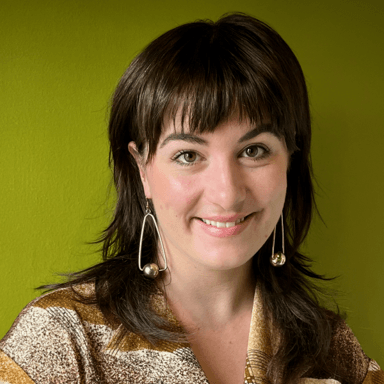
Chelsea Nash is a former political journalist who now owns the vintage store Curious Times Collective in Ottawa.