Furoshiki Gift Wrapping: A Step-By-Step Guide

The moment I knew for sure that Santa wasn’t real was when I was nine, and I heard the squeaking sound of my mom running out of tape, wrapping presents late into the night. Thankfully, you can avoid this telltale holiday reveal with a beautiful wrapping tradition.
Japanese furoshiki gift wrapping—wrapping gifts in reusable fabric—has been practiced in Japan since the Edo Period. It's also a great way to help reduce the 540,000 tonnes of plastic-finished, non-recyclable wrapping paper that Canadians discard every year.
The most sustainable (and cheapest) way to wrap furoshiki style is reusing old fabrics. Thrifted vintage silk or polyester scarves work exceptionally well.
Traditional furoshiki
Furoshiki comes from a time when fabric was highly valued. The fabrics usually used for furoshiki or bojagi are silk, cotton and ramie (though polyester is completely fine to use today). Back then, the labour of raising the silkworms and the mulberry trees they live in, or growing the ramie plants—whose fibres are used in linen—and processing the fibres, along with the dyeing and weaving of the cloth, would have been done in manual processes demanding a lot of labour and skill. As a result, fabric was expected to be used until it was worn out: first in new clothes, for a special event, or to be worn on the first day of the New Year, and then, in other formats like bojagi and furoshiki.
Traditional bojagi
Furoshiki and bojagi cloths were made with care, often hand-embroidered or quilted with symbolic designs or knots, like a Japanese family’s crest in Japan, or a Korean ceremonial marriage knot. The Korean textile artist and bojagi teacher Youngmin Lee explained that patchwork bojagi would sometimes be made from the scrap fabric from ceremonial dresses and suits—called hanbok—which, unlike kimono, used curved lines in their designs.
As a result, the bojagi would reflect the important events in a family’s life: weddings, births, funerals. Large bojagi could be hung in windows, where the dyed silk would colour the sunlight, like a stained glass window, or in a doorway, as a breezy sort of door. Beautiful examples of patchwork bojagi are now found in museums all over the world, like the Met in New York and the Victoria & Albert Museum in London.
The story behind furoshiki and bojagi

Furoshiki were originally used to carry clothes, towels and belongings to and from the bathhouse. It allowed you to keep everything wrapped up, clean and separate from others’ belongings. Furoshiki showed off innovative fabric production techniques that were also used in silk kimono.
Like yuzen dyeing, it's a technique that allows for the use of multiple separate colours on the same cloth. This produces intricate patterns or scenes that appear to be hand-painted.
Zero-waste cloth wrapping today
Today, the fashion industry is one of the worst polluters, after the oil industry. Since learning about the many traditional uses of cloth wrapping, I’ve noticed other times when I can use cloth instead of plastic, which will end up in a landfill, in oceans, and in animals like us.
I can wrap up my morning jar of tea and keep it hot. Or I can wrap up my summer comforter for storage, so the cat sleeping on it won’t mean an annoying round of washing next spring. I like to wrap my lunch boxes to prevent spills inside my bag, a disaster that has occurred dozens of times.
As I try new zero-waste substitutions, I appreciate the things I use more. I’m more hesitant about buying things I don’t need or will throw away. My individual choices may not save the planet, but for there to be enough pressure on governments to legislate reductions in carbon emissions, and companies to reduce their output, it will take massive cultural change that everyone contributes to.
If you are feeling a little blue about the carnival of wrapping paper discarded over the holidays, or bothered with all the fussiness of paper wrapping, furoshiki gift wrapping is a lovely alternative. You may even find yourself thinking of other furoshiki or bojagi-style uses for cloth around the house, as Canada moves away from single-use plastics. It’s nice when “being good” environmentally is so simple; an ecological alternative can be a joy in itself. And you won’t hear any tape rolls squeaking.
While the fabric originally used in furoshiki and also bojagi—the Korean cloth wrapping tradition— can represent a lot of labour to manufacture, the spirit of both is to use what you have and respect the workmanship and usefulness of fabric. I tried it out—here's how.
1. Get a big square cloth

To start furoshiki gift wrapping, first choose a cloth with a diagonal length about three times the length of the gift. It needn’t be exact. This Japanese wrapping proportion technique gives you just enough cloth to cover the gift without much extra flop on the sides.
I started with the simplest wrapping style, otsukai tsutsumi, a.k.a. the basic carry. A patterned women’s square scarf is just the right size for this. Ayano Hasui, the manager of international sales and press from Musubi, a furoshiki specialty shop in Kyoto, advises that you can use any cloth “which is not too thin, not too thick, and soft enough you can make a knot [of].”
Her shop uses silk, cotton, organic cotton, rayon, polyester, linen and wool.
The vintage scarf I used is polyester, with a graphic pattern in seafoam green, on a cream-colored background. It costs about three dollars. Other options might be a square tablecloth, or a length of unused fabric. I recommend popping the cloth in the wash if you’re using something bought second-hand for these wrapping techniques.
2. Lay your cloth out on a flat surface and place the gift in the middle


I laid my scarf flat on a large table, diagonally, and positioned the gift in the centre. The square’s pointed edge was facing me. I tried to think of the long ends as handles tied up at the top of the gift. It’s a bit like beginner’s origami, or neatly wrapping a book in paper.
I took the corner in front of me, and laid it over the gift, and tucked the corner of extra cloth underneath. Likewise with the opposite lower side. It’s okay if the extra fabric at the corner hangs loose.
At first, I was worried about wrapping the gift in the correct, traditional way. But Hasui reassured me that the most important part is “learning how to make a square knot—called ma-musubi in Japanese—because it’s not safe when you carry objects if it's tied in a different way.”
Folding isn’t as important as making sure the gift is actually secure.
3. Narrow the sides that will be tied up

If you’ve ever made a paper airplane, the principle is the same. Bring the edges of each side towards the centre, to make them more like little handles. Ideally the edges of each side will meet in the middle, in a line pointing to the corners of each side. The fabric will move; don’t worry if these shapes won’t stay exactly straight, because you’re about to tie them together.
4. Bring these side handles together and tie them in a square knot at the top


Lastly, I took the left and right side handles and brought them together at the top of the gift. I tied them into a double knot, also known as a square knot. The ma-musubi, or square knot, is important if you are carrying a wine bottle in your furoshiki. It’s actually the exact same knot that’s taught to Scouts and in macramé—two loops intersecting, which allows it to bear weight.
The trick is to use the same side to tie both knots. The loose ends should end up pointing the direction they came from. For my purposes, this knot didn’t have to be weight-bearing. It was snug, but not too tight to be untied.
The extra ends fell over the sides. I was impressed with how cute it turned out, and how quickly the wrapping came together. The result was a little parcel wrapped in a beautiful checked fabric, ready to be presented to my friend.
How to add flair to your wrapping
Some styles of furoshiki only use one cloth: others will use an elastic band or a ribbon, too, to hold together a folded pattern at the top, like this one that looks like flowers. You can also tuck a real flower into the knot at the top, which isn’t traditional, but is fun. There are different wrapping styles for different objects, such as books and wine bottles.
And here's how to wrap books Furoshiki style


Is it easier than using wrapping paper?
In a nutshell, yes. In the time remaining before the holidays, I’m going to look for square cloths to match gifts I have in mind. If you're interested in doing the same, check out your local thrift store for linen tablecloths you can cut into squares. Or, you can also purchase new wrapping cloths.
Furoshiki Wrapping Cloths We Love
Next Chance - Vintage Christmas Pattern, 20'', $13
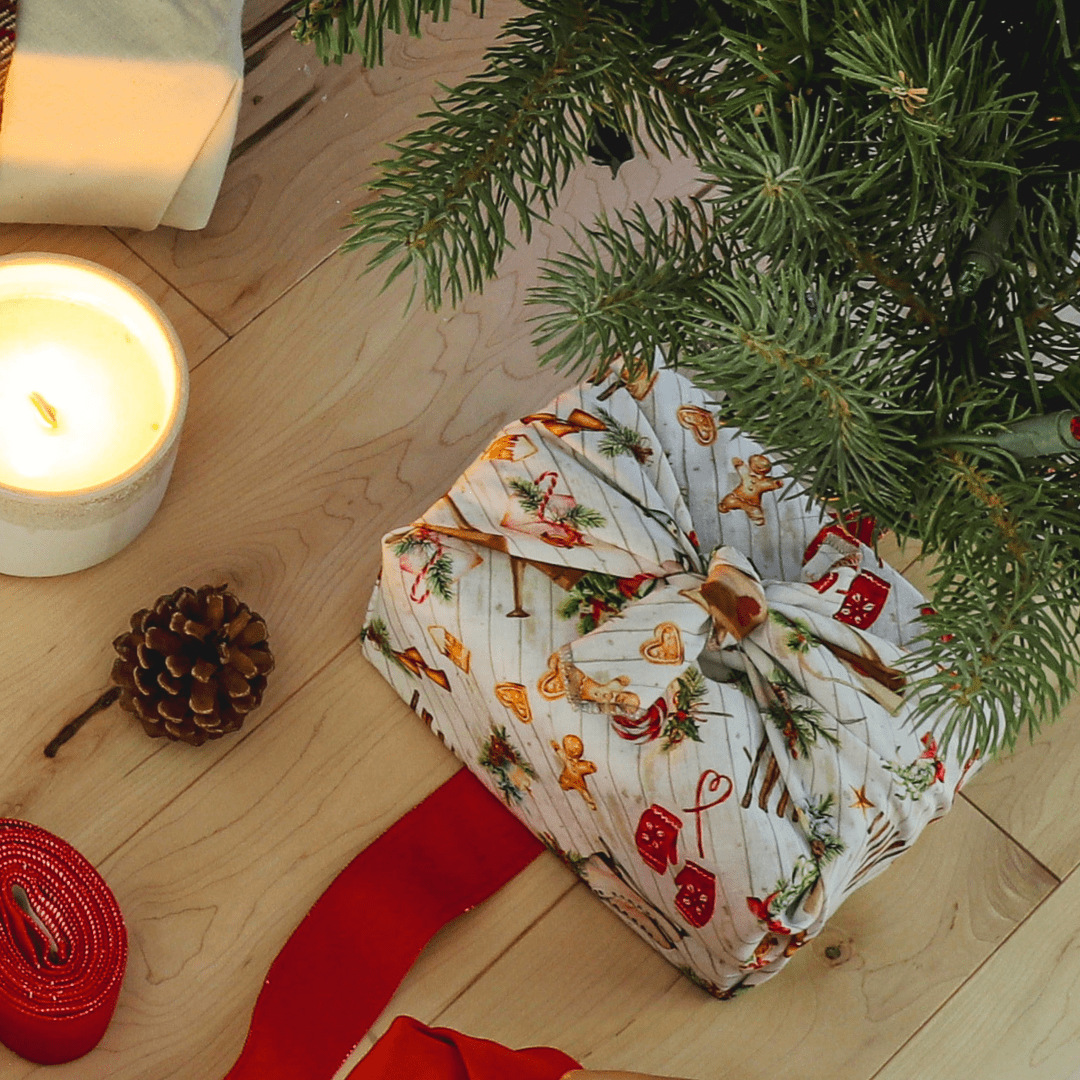
If you're looking for a classic holiday print, this pattern from Next Chance's furoshiki wrap collection is cute and Canadian-made. Each piece is salvaged from scraps or surplus fabrics rescued from local designers and manufacturers, making them sustainable and unique. The small size will wrap a mug, toque, book, or other small gift.
Musubi Kiln Furoshiki Bag Handles, $8

To elevate the elegance and practicality of the furoshiki wrap, Musubi Kiln has a set of handles that can be tied seamlessly to the fabric for a cute handheld bag. If you've got the wrapping down, but still haven't found the right gift to go inside, they have curated collections complete with pottery, matcha sets, and other wares to fit the occasion.
Japanese Furoshiki Handkerchief, $25

Gift wrapping now, handkerchief or pocket square later—this is perfect for a cat lover.
TAYU-TAFU Reversible Furoshiki Cloth Gift Wrap, $21

This reversible cloth can be switched from summery to snowy vibes, depending on the season. The 19x19 inch square is cotton and washable.
Furoshiki Wrapping Cloth, $12-$22

Olsen+Olsen sell made-in-Canada furoshiki cloths in both 50-cm and 90-cm squares, so you can wrap small and and large gifts in a variety of styles and colours—including this gorgeous reversible number. A sprig of greenery tucked in can really make it pop.
Furoshiki Reusable Gift Wraps, $20

Printed on a recycled cotton and recycled polyester blend, these cloths are roomy 90-cm squares. We're partial to this breezy floral print!
Reversible Furoshiki Wrap Cloth, $10-$65

Calgary shop Nanao Kimono has a huge range of furoshiki cloth sizes—all the way up to a whopping 1-m square, appropriately adorned with the world's largest animal, the blue whale.
Liberty Print Fabric, $10 per half yard

Or, head to your local fabric shop and buy some gorgeous fabric—even lovely Liberty floral prints, if you're feeling fancy—and turn it into your own DIY wrap.
More gift wrapping ideas:
The Easiest Way To Tie A Perfect Bow
7 Cute And Eco-Friendly Alternatives To Wrapping Paper
How To Make A Beautiful Tissue Paper Bow
This article contains affiliate links, so we may earn a small commission when you make a purchase through links on our site at no additional cost to you.